Have you ever eaten something so simple that it instantly took you back to your childhood? Maybe it reminded you of rainy evenings at home, Sunday family lunches, or those days when your mother would prepare your favourite meal after a long day at school. That is the power of comfort food.
In India, food is more than just nourishment. It is connected to memories, emotions, traditions, and people we love. Sometimes, a simple bowl of dal chawal can bring more happiness than the most expensive restaurant meal because it carries a familiar feeling of ghar jaisa swad.
When we talk about comfort food india, we are talking about dishes that make us feel safe, relaxed, and connected to home. They may not always be fancy, but they have a way of bringing back memories that no modern food trend ever can.
Why Does Comfort Food Hit Different in India?
India is a country where feeding someone is basically a love language. A mother does not say, “I missed you.” She makes your favourite sabzi. A grandmother does not ask if you are okay. She hands you a bowl of something warm.
So when we talk about comfort food India style, we are not just talking about taste. We are talking about the entire emotional package that comes with it. The smell that hits you before you even enter the kitchen. The sound of the tadka. The fact that someone made it specifically for you.
Ghar jaisa swad is not really about ghee or spices. It is about the feeling of being known.
Khichdi: Humble, Boring, and Somehow Perfect
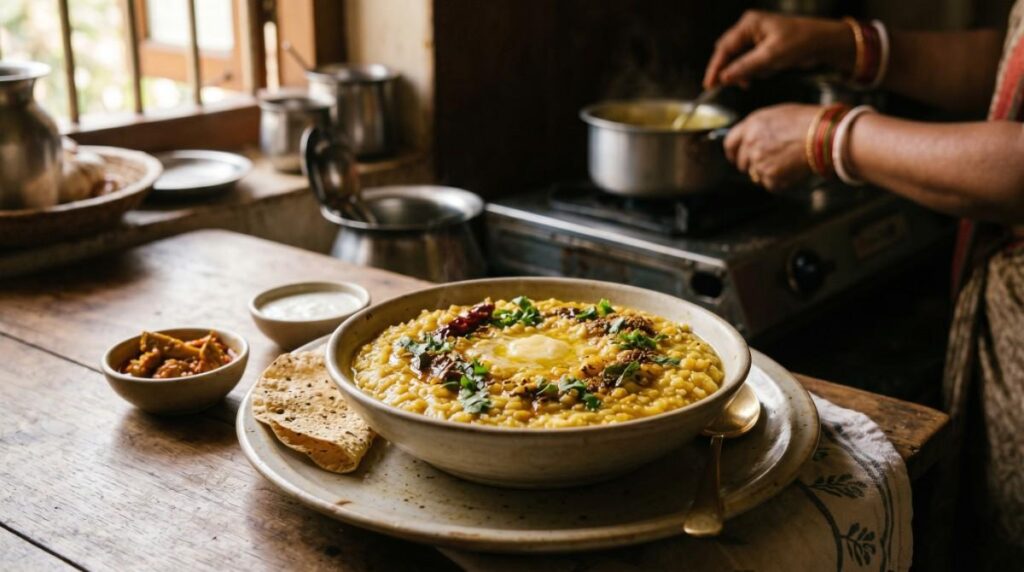
If you have ever been sick in an Indian household, you have been given khichdi. No negotiation.
Rice, dal, a little haldi, maybe some ghee on top. Nothing exciting on paper. But there is something about khichdi that cuts through any amount of stress or discomfort and just settles you. People who have lived abroad for years will tell you the first thing they crave when they are homesick is not biryani or butter chicken. It is khichdi.
That is because khichdi was never about being impressive. It was always about being reliable. And sometimes reliability is everything.
Dal Chawal: The Dish That Travels With You
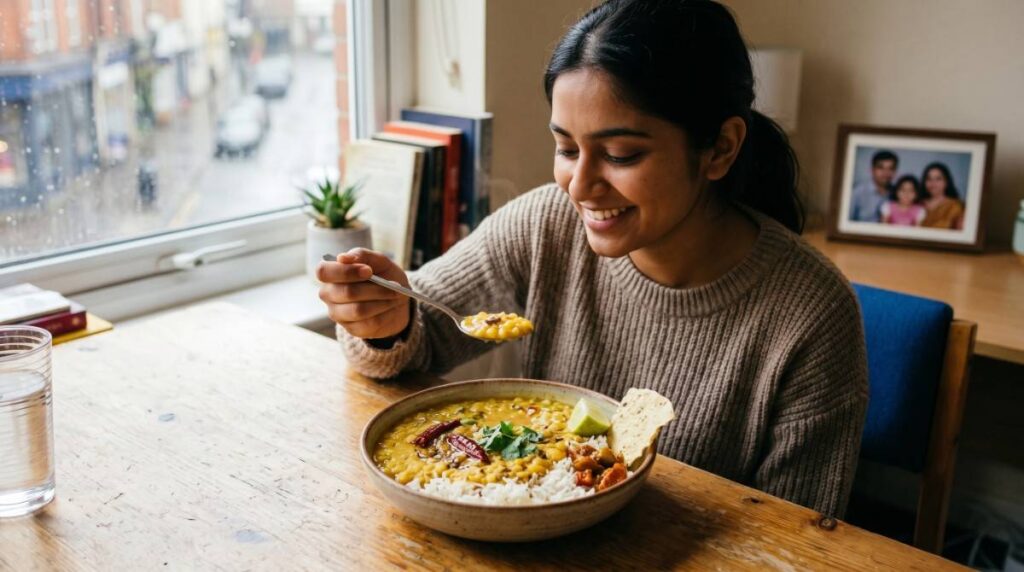
Ask anyone who moved away from home for college or work what they missed most. Nine times out of ten, dal chawal comes up.
It is almost annoyingly simple. Dal and rice. That is it. But after two weeks of eating out, after every restaurant meal starts blurring into the next, dal chawal feels like exhaling. It has that quality of resetting you back to baseline.
The version your mother makes will always taste different from anyone else’s, even if the recipe is technically identical. That difference is not the ingredients; it’s a memory.
Rajma Chawal: Sunday in a Bowl
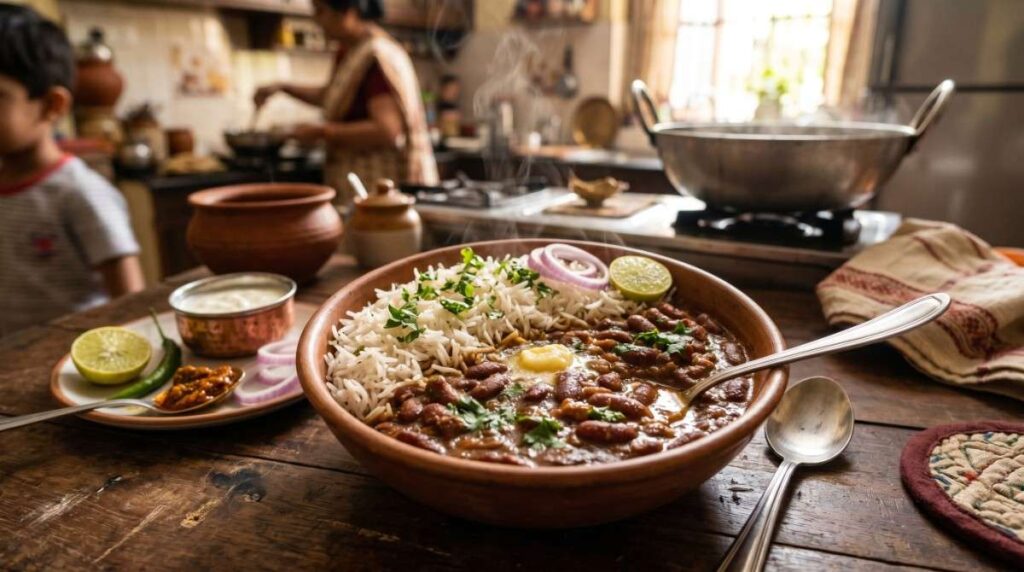
In a lot of North Indian homes, Sunday had a smell. Slow-cooked rajma, the kind that fills the whole house for hours before lunch is even ready.
Nobody planned anything on rajma Sundays. You just waited, slightly impatiently, and then you sat down and ate too much and felt good about it. Rajma chawal is one of those popular Indian dishes that carries an entire mood with it. Unhurried. Generous. Exactly what a weekend should feel like.
People living far from home know this feeling particularly well. One good plate of rajma chawal and suddenly you are eleven years old again, and your biggest problem is whether you get seconds.
Paranthas: The Original Morning Thing
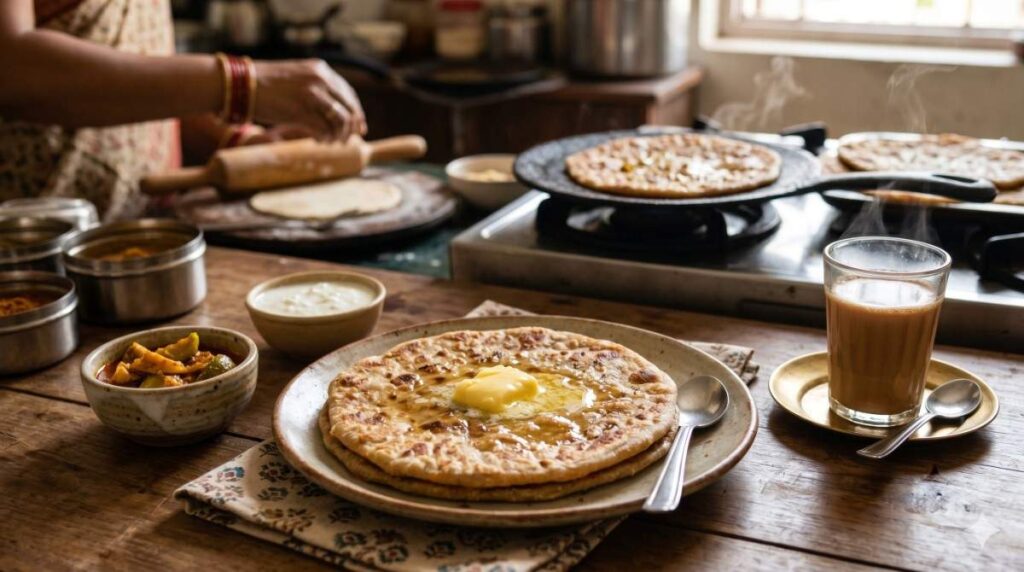
There was a time before smoothies and overnight oats when Indian mornings looked like this: butter melting on a hot paratha straight off the tawa, pickles on the side, and chai nearby.
Aloo, paneer, gobhi, and mooli; every household had its version of paranthas. Every household was convinced theirs was the correct one. And honestly, they were probably all right because the paratha itself was never really the point. The point was sitting down together in the morning before the day took over.
Homestyle Indian food does not get more real than a paratha made by someone who knows how you like it.
Poha: Quietly Underrated
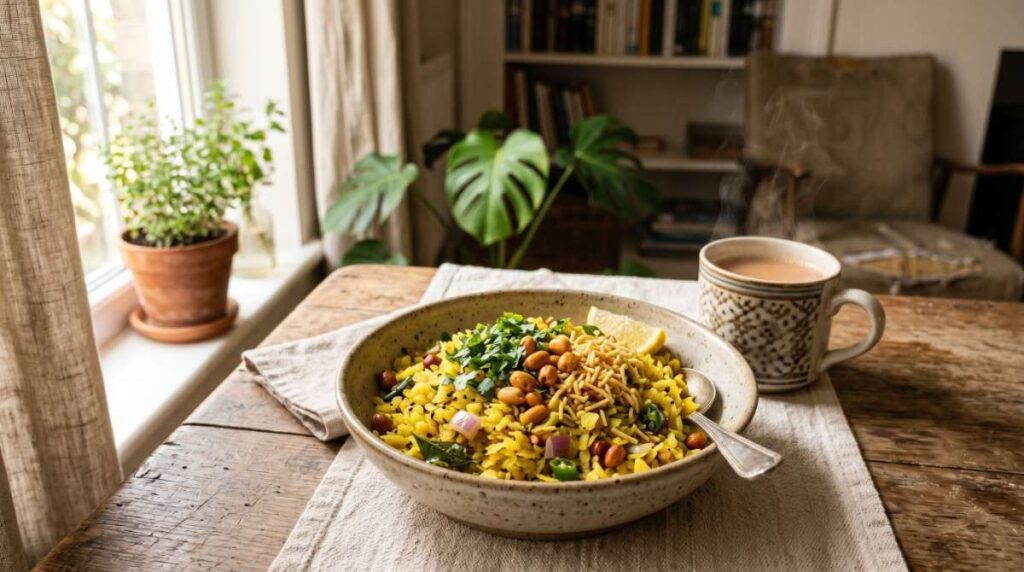
Poha does not get the dramatic nostalgia treatment that rajma chawal does, but it probably deserves it.
Light, quick, done in minutes, and somehow satisfying in a way that does not weigh you down. Peanuts for crunch, lemon for brightness, a little coriander on top. Poha belongs to slow mornings. The kind where you are not rushing yet, where you can actually taste what you are eating.
For a lot of people it is less of a memory trigger and more of a daily ritual, which might actually make it more important. Not every comfort food needs to be nostalgic. Some just need to show up consistently.
Maggi: Not Traditional, Still Counts
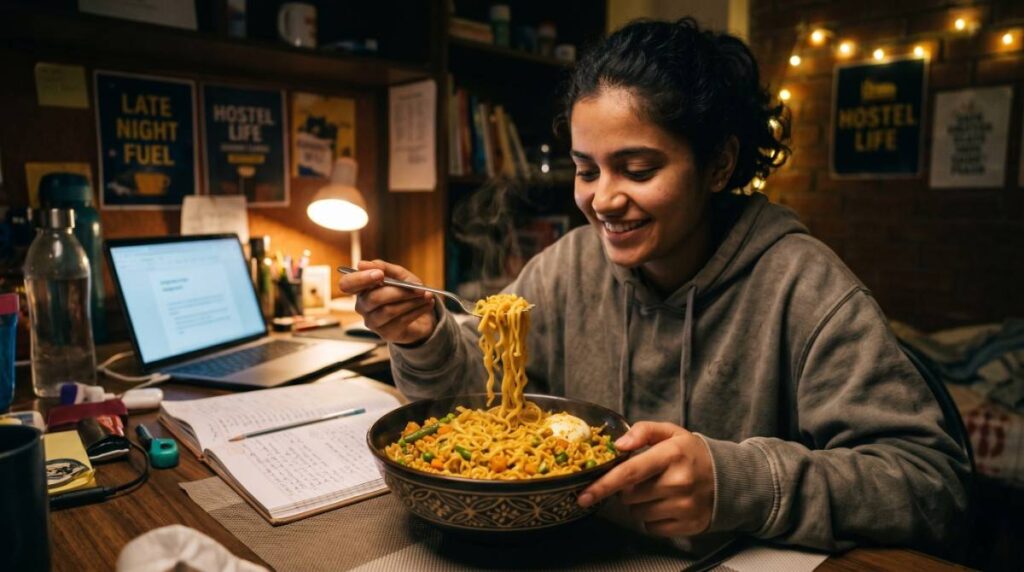
Look, Maggi does not have a centuries-old history. Nobody’s grandmother passed down a secret recipe for it.
But if you grew up in India in the last thirty years, Maggi has a place in your emotional memory that very few foods can claim. Hostel rooms at 11pm. Power cuts. After-school hunger. Rainy afternoons when nobody wanted to cook anything serious.
Maggi earned its place in Indian comfort food not through tradition but through repetition and timing. It showed up consistently during specific chapters of life, and that is enough.
Chai and Whatever Goes With It
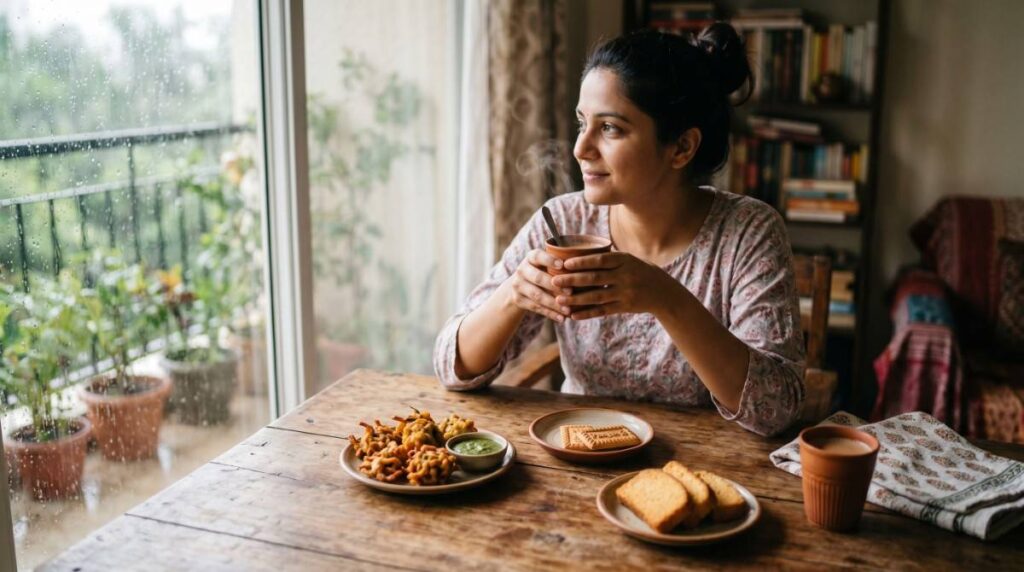
This one is less about a specific food and more about a specific ritual. Chai with pakoras when it rains. Chai with biscuits when someone visits. Chai with cake rusk when you just need five minutes to yourself. And for many, chai with a buttery bun maska is the perfect combination of simplicity and comfort. The drink matters but so does the pause it creates. In a country where people are constantly busy and constantly surrounded by others, chai is permission to stop for a moment.
It is comfort food in the truest sense because the comfort is not just in the taste. It is in the act of making it, the familiar routine of it, and whoever you happen to be drinking it with.
The Real Thing About Homestyle Indian Food
No restaurant has ever fully cracked it, and they probably never will.
Home cooking carries things that cannot be listed in ingredients. The imprecise measurements. The adjustments made based on who is eating. The fact that someone chose to spend time making it for you specifically
That is what people mean when they say ghar jaisa swad. It is not a flavour note. It is a relationship encoded in food.
Conclusion
Comfort food in India is really just India, at its most honest. Dal chawal when you are exhausted. Khichdi when you are unwell. Rajma chawal when the week finally ends. Chai when you just need a minute.
These dishes are not competing with anything. They are not trying to be trendy. They exist because they work, because they have always worked, and because the people who made them for us put something into them that no recipe can fully explain.
Wherever you are right now, whatever you have been eating lately, you probably have one dish from this list that just made you feel something. That feeling is the whole point.
FAQs
Q: What is comfort food in India?
Comfort food in India is whatever dish makes a person feel settled, safe, and reminded of home. For most people that means something like khichdi, dal chawal, rajma chawal, or parathas, but it is honestly personal.
Q: What are some popular comfort foods of India?
Khichdi, dal chawal, rajma chawal, poha, parathas, and chai paired with snacks are the ones that come up most often. Maggi also has a strong case, especially for anyone who grew up in the last few decades.
Q: Why is homestyle food considered comforting?
Because it carries memory. The taste connects to specific people, places, and moments in a way that restaurant food rarely does.
Q: Which is the best comfort food in India?
There is no single answer. It depends completely on where you grew up, who cooked for you, and which dish your brain associates with feeling okay.
Q: Why do people feel nostalgic about comfort foods?
Because eating is one of the few things we do every day, which means food gets tied to almost every significant memory. A familiar taste can pull up years of emotion in seconds.
Q: Are comfort foods always traditional?
Not at all. Maggi is the obvious example. Comfort food is whatever consistently showed up during the chapters of your life that mattered.