Did you know the paratha has been part of Indian breakfast tables for centuries, long before anyone started talking about smoothie bowls or overnight oats?
Most people who grew up in an Indian home have a memory tied to this dish. The dough hitting the rolling board, the first sizzle on a hot tawa, and the smell of ghee drifting through the kitchen before anyone has even sat down.
A stuffed paratha doesn’t ask for much either. Flour, water, a filling you like, and some heat. That’s really it. But somehow this combination has stuck around in Indian kitchens for generations, and once you’ve made a decent one yourself, it’s not hard to see why.
Why has stuffed paratha stayed so popular?
New breakfast trends show up every few years, and most of them fade out just as quickly. The paratha, though, has never really gone anywhere.
Part of it is how flexible it is. Almost anything sitting in your fridge can become a filling. Part of it is how filling it actually is, no pun intended. A good stuffed paratha recipe gives you carbs, vegetables, and often some protein, all in one dish, and keeps you going for hours rather than just until mid-morning.
But honestly, a lot of it is sentimental too. For many people, parathas bring back memories of someone in the family standing at the stove, making one after another while everyone else eats first. That kind of memory tends to stick.
What makes a good paratha vs an average one?
The dough is usually where things go right or wrong, even if people don’t always realise it.
Too stiff, and rolling becomes a bit of a fight. Too soft, and the filling tends to push through before you’ve even flattened it properly. What you want sits somewhere in between, soft enough to roll easily but firm enough to hold everything inside.
The filling matters too, mainly because of moisture. A filling that’s too wet usually ends in a torn paratha and a mess on the tawa. Once you get a feel for both of these, the rest comes together pretty naturally.
What will you need to make stuffed paratha?
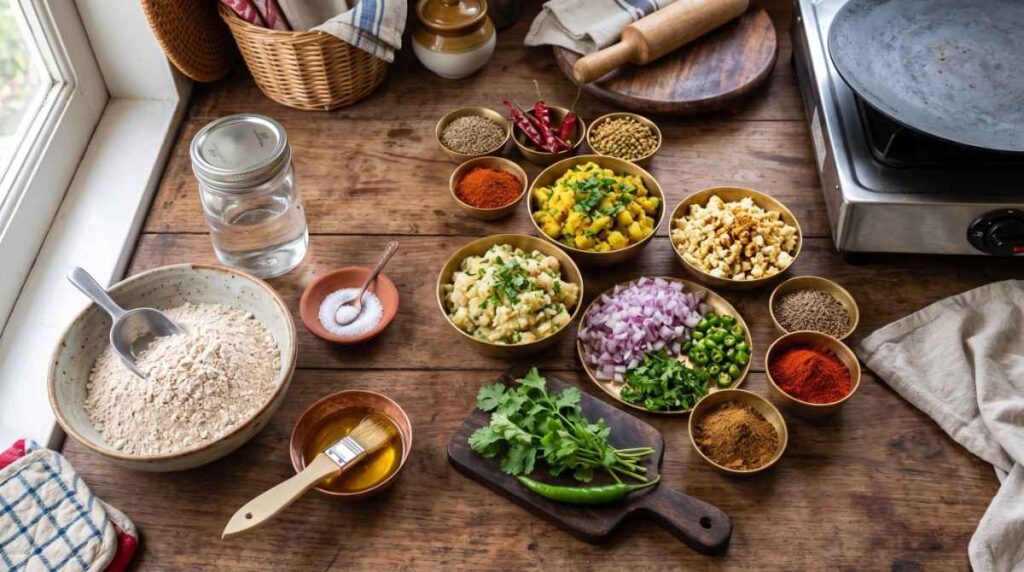
For the dough, you just need whole wheat flour, water, a pinch of salt, and a little oil. Nothing unusual there.
For the filling, it can vary based on what you want to prepare, although potato, paneer, onion, vegetable, coriander leaves, and green chili can be some of the ingredients along with common spices such as cumin, garam masala, and red chili powder.
This is one of the reasons why this easy paratha recipe is very convenient. The great thing about it is that it can be prepared using the ingredients already found at home. For 4 to 5 parathas, you’ll typically need:
• 2 cups whole wheat flour
• ¾ cup water (approximately)
• ½ teaspoon salt
• 1 teaspoon oil
• 1 cup prepared filling of your choice
How to make stuffed paratha at home?
Step 1: Make the dough
Mix the flour, salt, and water into a soft dough, then knead until it feels smooth. Cover it with a damp cloth and let it rest for fifteen to twenty minutes.
This resting step is worth not skipping. It makes a real difference to how easily the dough rolls out afterwards. If you’ve ever wondered why parathas sometimes feel softer and easier to roll in one kitchen than another, the resting time is often part of the reason.
Step 2: Prepare the filling
Mix your filling with all the herbs and spices that you are using. If the filling seems to be moist, make it dry because excess moisture always causes trouble while making the paratha.
Step 3: Prepare and form it
Roll out a small piece of dough, place the filling in the middle, cover it, and press hard enough with your hand, and then make a round paratha from the dough.
Step 4: Fry it on the tawa
Put the formed paratha on a hot tawa and fry it till it forms brown patches, and then turn it to fry the other side. Spread some ghee or oil and fry both sides till they turn golden brown.
Cooking it on medium heat is recommended. High heat will burn the outer surface before the inner parts get ready.
Step 5: Serve it hot
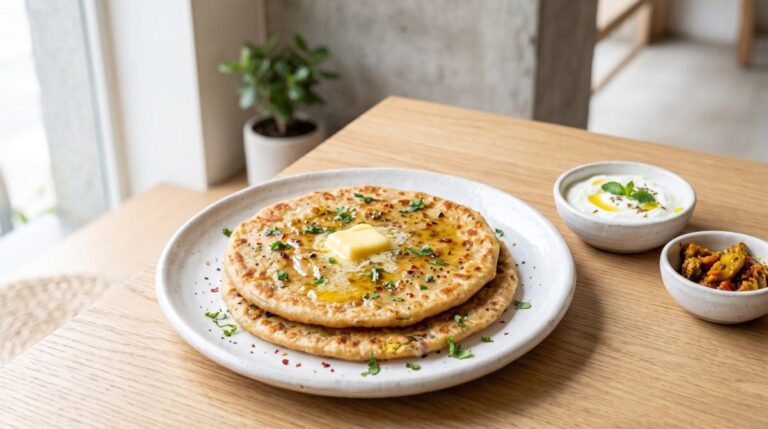
This part really matters. A paratha that’s been sitting for a while just isn’t the same as one straight off the tawa. Curd, pickle, butter, or chutney all work well alongside it.
Why does a stuffed paratha sometimes break while rolling?
There are basically three reasons why a paratha cracks when making it: the dough is too moist, the stuffing is too wet, or the stuffing is put in excess for that dough. If this occurs, then try using less filling, which should be easier to roll with.
Aloo paratha recipe
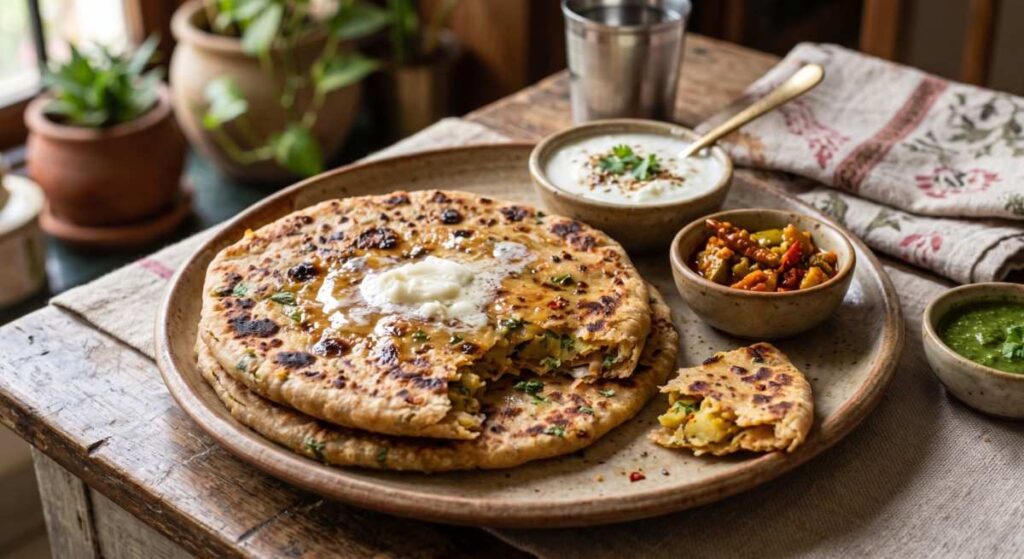
If there were to be one paratha representative of Indian breakfast dishes, then it would surely be this.
Aloo Paratha is a variation on paratha that makes use of spiced mashed potatoes, which could be enhanced by the addition of some coriander or green chillies to increase the taste. This simple yet comforting dish cannot help but bring a feeling that defies explanation.
When eaten with curd and pickles, this is a meal that Indians love as their favourite choice to have during their breakfast. There is one tip when making this paratha, and that is to allow the potatoes to cool down before using them to stuff the paratha, since this will make it more difficult to roll if the potato is still warm.
Paneer paratha recipe
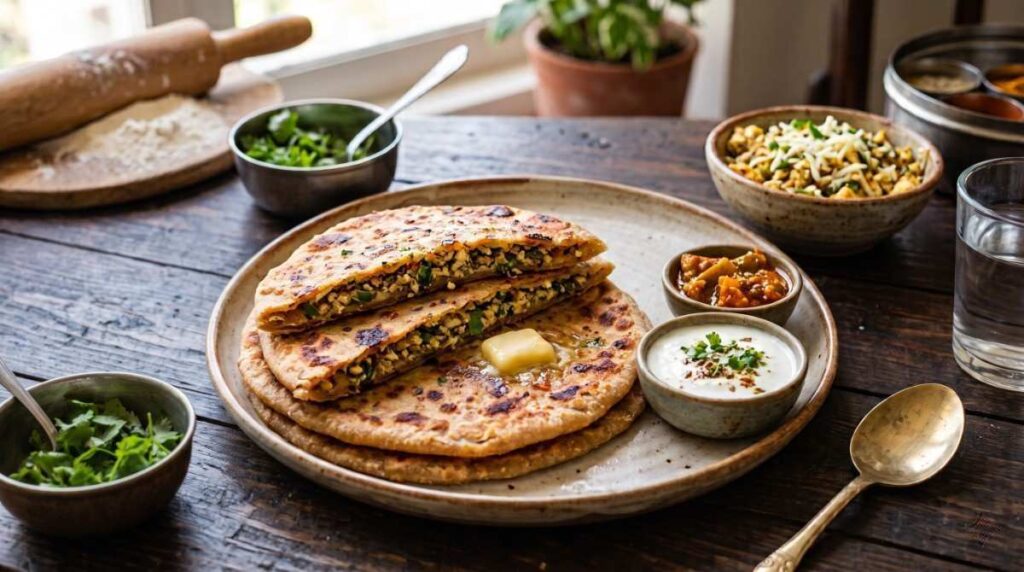
If you’re after something a bit more substantial, the paneer paratha recipe is a solid choice.
Grated paneer mixed with herbs and spices makes for a soft, flavourful filling that pairs nicely with whole wheat dough. A lot of people prefer this version specifically because the added protein keeps them full for longer, which makes it a practical pick on busy mornings. Finely grated paneer usually works best because it spreads more evenly through the filling and makes the paratha easier to roll.
Other fillings worth trying
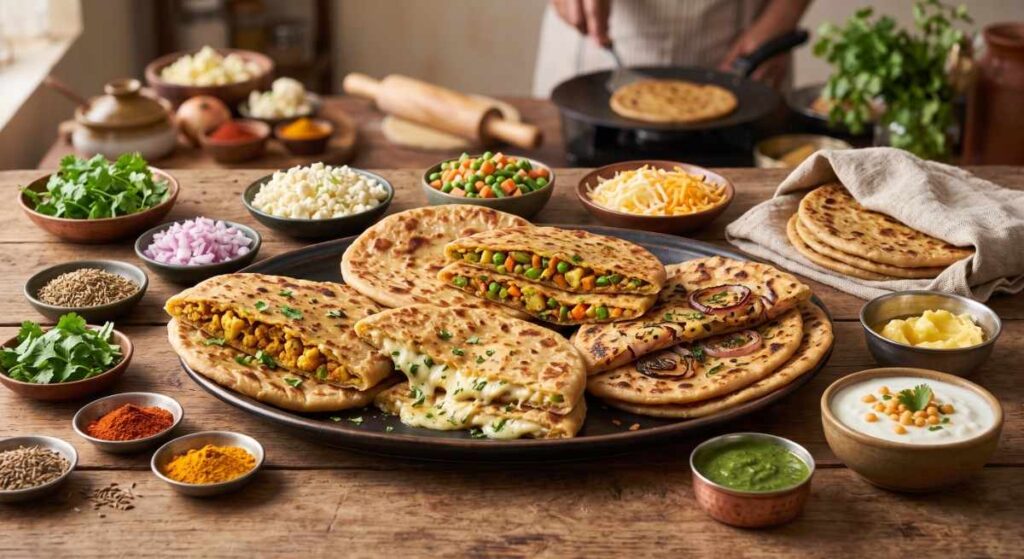
Once the basic technique feels comfortable, there’s plenty of room to experiment.
Mixed vegetable parathas are great when you’ve got a few odds and ends that need using up. Onion parathas have a sharper, more intense flavour. Cauliflower parathas are a classic in their own right, and cheese parathas have become quite popular in recent years too.
Each filling brings something different in terms of taste and texture, but the comforting feel of an indian stuffed paratha stays the same no matter what’s inside.
Why does stuffed paratha work so well for breakfast?
A breakfast paratha recipe does more than just taste good. It gives you energy that lasts well into the day and doesn’t really need a bunch of side dishes to feel like a proper meal. One paratha with some curd or pickle is often more than enough, whether it’s a rushed weekday or a slower weekend morning.
A few things that genuinely help
Aim for soft dough rather than stiff, since stiff dough makes rolling much harder than it needs to be.
Try not to overstuff. It feels generous at the time, but it usually ends with a torn paratha and filling everywhere.
Stick to medium heat consistently. It lets the inside cook properly while the outside gets that nice golden crust.
And where possible, use fresh ingredients. The difference between a paratha made with fresh vegetables and one made with leftovers that have been sitting around for a while is bigger than most people expect.
Why does homemade still feel different?
Restaurants rarely manage to get this one quite right. Maybe it’s the fresher filling, or maybe it’s just that someone made it with you in mind. Either way, that familiar ghar jaisa swad from a homemade paratha is something restaurant versions consistently fall short of, even at places that are otherwise pretty good.
Conclusion
A good stuffed paratha recipe is proof that simple ingredients can come together into something genuinely satisfying. Whether it’s the classic aloo paratha recipe, a protein-rich paneer paratha recipe, or something improvised with whatever vegetables happened to be around, the result tends to feel the same every time. Warm, filling, and exactly what breakfast should be.
Next time you’re stuck on what to make in the morning, a stuffed paratha is unlikely to let you down. The secret isn’t a complicated recipe or a special ingredient. More often than not, it’s simply soft dough, balanced filling, and a little patience while rolling.
Next time you’re stuck on what to make in the morning, a stuffed paratha is unlikely to let you down.
FAQs
Q: What is a stuffed paratha?
A stuffed paratha is an Indian flatbread filled with ingredients like potatoes, paneer, or vegetables, then cooked on a tawa with ghee or oil until golden and crisp.
Q: What’s the most popular stuffed paratha filling?
The aloo paratha recipe is generally seen as the most popular variation across India.
Q: Is paneer paratha healthy?
A paneer paratha recipe can be a genuinely nutritious choice, since paneer adds protein and calcium to the meal.
Q: Can I make an easy paratha recipe at home?
Yes, definitely. The ingredients are simple, and once you’re comfortable with the dough and filling, it comes together quickly.
Q: What can I serve with stuffed parathas?
Curd, pickle, butter, and chutney are the usual choices, and tea goes nicely alongside too.
Q: Why is stuffed paratha a good breakfast option?
A breakfast paratha recipe keeps you full for hours and works well as a complete meal on its own.
Q: Why is my stuffed paratha breaking while rolling?
A: This usually happens when the filling contains too much moisture, the dough is too soft, or the paratha has been overstuffed. Slightly drier filling and gentle rolling usually solve the problem.