
Mornings in most Indian homes are already loud before 7am. Someone needs a tiffin packed. Someone else cannot find their keys. The chai is boiling over. And breakfast, somehow, is supposed to happen in the middle of all this.
Most people just give up. They grab a biscuit, maybe some leftover roti, or nothing at all. Then wonder why they feel hollow and irritable by 10am.
Here is what actually fixes that. Not some elaborate meal plan or imported superfood. Just the food that was always sitting in your kitchen, like Poha, Upma, and Besan cheela. Stuff your mother or grandmother made without thinking twice, in less time than it takes to scroll through breakfast ideas on your phone. That is what this is about.
Why Skipping Breakfast Hits Harder Than You Think
Your body runs on an overnight fast every single night. By morning it has been six, seven, maybe eight hours without fuel. Skipping breakfast on top of that is not discipline. It is just deprivation, and your body keeps score.
The energy crashed around 11am. The bad mood that arrives before lunch. The way you eat twice as much as you planned when you finally do sit down. All of that traces back to the morning. Feed yourself something real and the whole day shifts. Not dramatically. Just noticeably.
What Indian Breakfasts Get Right That Others Do Not?
Nobody sat down and nutritionally engineered poha or idli. They just evolved that way through generations of people figuring out what actually worked. And what worked was combining a carbohydrate with some vegetable and some protein, keeping it light enough to eat early but filling enough to last.
Poha has peanuts. Cheela is gram flour. Idli is fermented. Upma gets whatever vegetables need to be used up. None of this was planned. It just makes sense.
Compare that to most packaged breakfast options, and the difference is obvious. One is built from real ingredients by people who ate it every day. The other is built in a factory for shelf life.
Poha
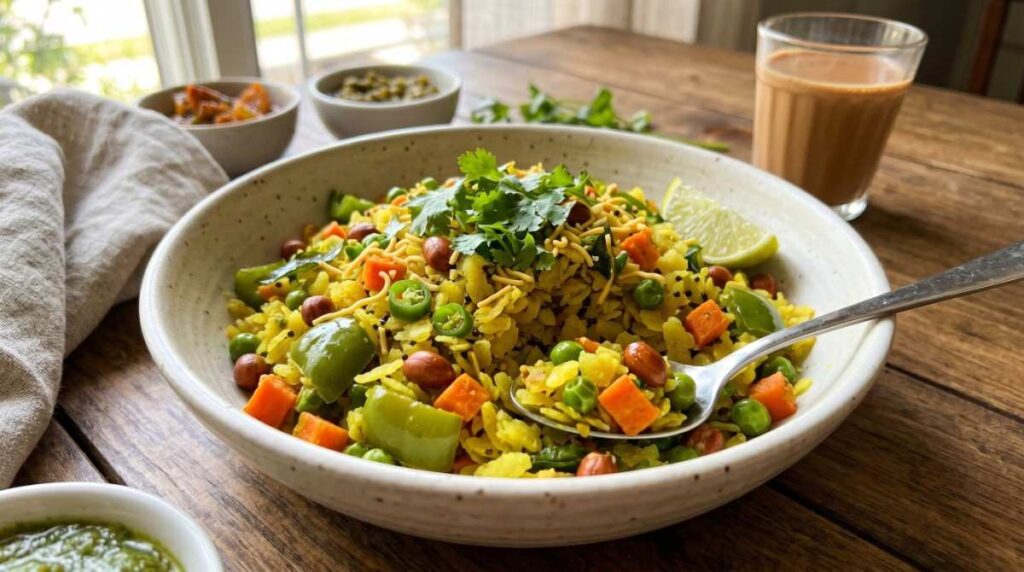
Ten minutes only! That is genuinely all it takes to prepare a good poha.
Rinse the flattened rice, let it sit for two minutes while you get the pan hot. Mustard seeds go in first. Then curry leaves if you have them. Onion, green chilli, and a handful of peanuts. The poha goes in last with a bit of turmeric and salt. Stir it around for a few minutes.
Lemon at the end. Coriander on top. Done. It is light without feeling inadequate. It fills you without making you feel like you need to lie down after. And the lemon does something to the whole dish that is difficult to explain until you try it. Do not skip it.
Upma
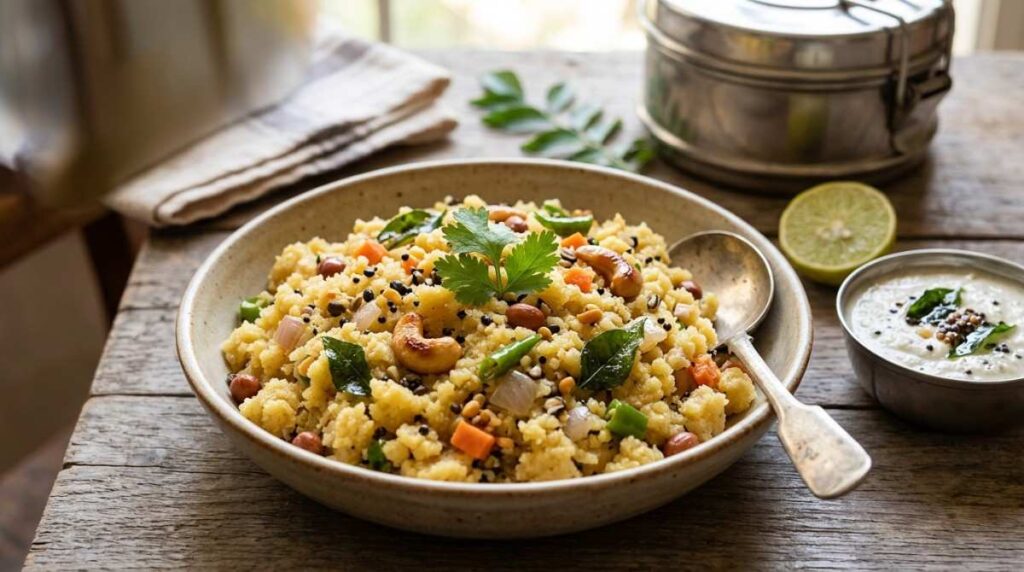
Upma has an image problem. People remember a bad version of it from a school canteen somewhere and write it off entirely. That is a mistake.
Made properly, with semolina that has been dry roasted until it smells slightly nutty, with mustard seeds and curry leaves crackling in hot oil, with vegetables added in and cooked until just soft, it is genuinely good. Warm and savoury and filling in a way that carries you comfortably to lunch.
The trick most people miss is roasting the rava before adding water. Unroasted semolina turns gluey. Roasted semolina stays light and separate. Two minutes in a dry pan makes the entire difference.
Besan Cheela

Take gram flour. Add water until it is the consistency of a thin batter. Salt, jeera, a pinch of haldi, finely chopped onion, tomato, green chilli, and coriander. Whisk it together. Pour a ladleful onto a hot pan. Let it set, flip it, and done.
That is it. The whole thing. The protein in gram flour means this breakfast actually holds you. Not in a heavy way. In a quiet, steady way where you reach 1pm and realise you never got hungry. Serve it with green chutney, and it stops feeling like a healthy choice and just feels like a good meal.
Vegetable Oats
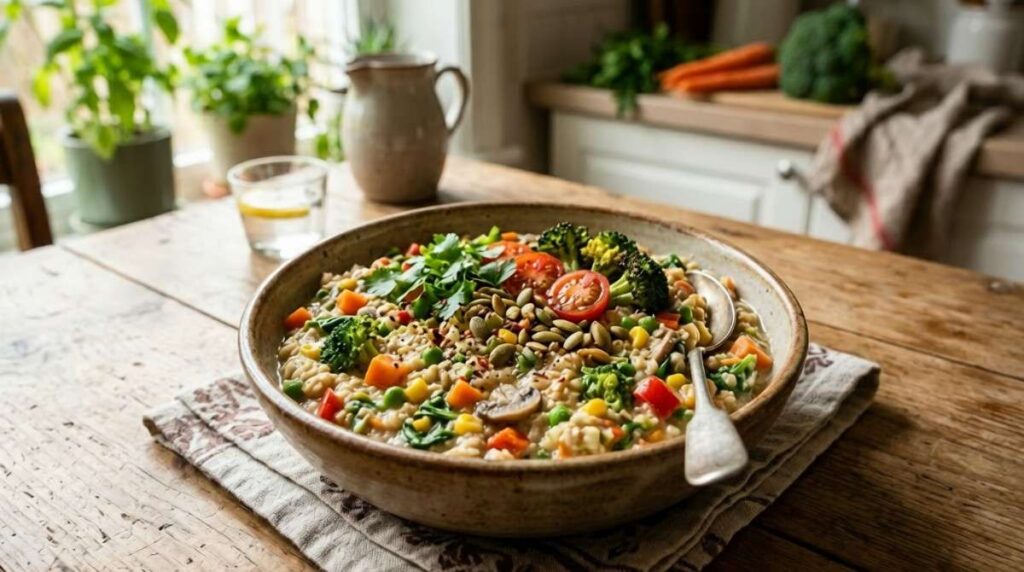
Not the sweet kind. The Indian kind. Mustard seeds in oil. Curry leaves. Finely chopped onion, carrot, capsicum, whatever is there. Oats go in after the vegetables are slightly cooked, along with water or thin buttermilk, salt, and a pinch of turmeric. Cook it until everything comes together.
It sounds strange if you have only ever had oats with milk and honey. But this version is savoury and warming and genuinely satisfying. It also digests cleanly, which matters more than people realise first thing in the morning.
Idli and Chutney
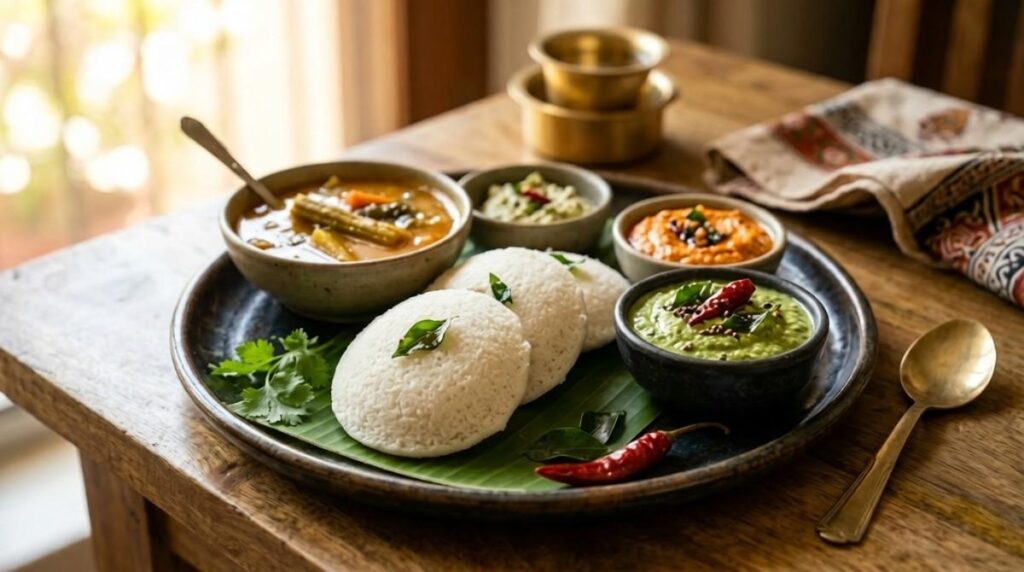
Idli has survived this long because it actually works. Steamed, fermented, light on the stomach. No oil in the cooking. No heaviness after eating. Suitable for everyone from a six-month-old to an eighty-year-old without modification.
The fermentation is what makes it special. It is not just about taste. Fermented food is easier to digest and better for gut health. Your grandmother probably did not frame it that way, but that is what was happening.
With a good coconut chutney alongside a bowl of sambar, it is a complete meal. One that leaves you feeling good rather than just full.
Sprout Salad
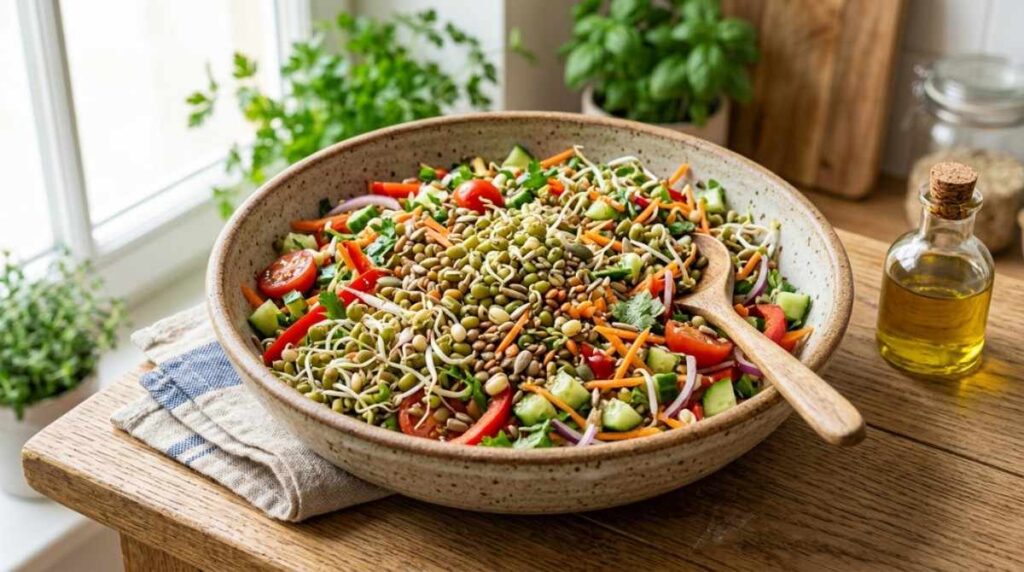
No cooking at all. That alone makes it worth knowing about.
Moong sprouts, chopped tomato, onion, and cucumber. Lemon juice, chaat masala, salt, coriander. Toss it together in two minutes and eat.
The fibre and protein in sprouts mean this holds you better than it looks like it should. It is also one of the only breakfasts that feels genuinely energising in hot weather when the idea of standing over a flame is unbearable.
How to Actually Make This Happen on Busy Mornings?
The real barrier is never the cooking. It is the prep.
Chop your onions, tomatoes, capsicum, or whatever you use most on Sunday evening. Store everything in small containers in the fridge. Suddenly every morning starts with vegetables already ready. The ten-minute breakfast becomes a six-minute breakfast. The six-minute one becomes something you do automatically without thinking about it. That one habit makes everything else easier.
Why Have These Breakfasts Lasted Generations?
It is not nostalgia. It is not tradition for tradition’s sake. It is that these breakfasts were built around real constraints, real mornings, real hunger, and real budgets. They use ingredients that are cheap and always available. They cook fast. They taste good. They keep you full.
No trend that arrived in the last decade has managed all four of those things together. That is why poha and idli and cheela are still here. They earned it.
Conclusion
You do not need a new breakfast routine. You probably just need to actually use the one that has been in your family for decades.
Pick one recipe. Make it three times this week. By the third time it will feel automatic. Add a second one the following week. Within a month you will have a proper breakfast rotation that takes less time than standing in line at a coffee shop and leaves you feeling genuinely better for the rest of the day.
That is the whole idea. Nothing complicated. Just real food, made quickly, eaten before the day gets away from you.
FAQs
Q: What is the quickest Indian breakfast to make?
Poha and sprout salad are both genuinely under ten minutes. Besan cheela is close. If vegetables are already chopped the night before, any of these can be done faster than most people expect.
Q: Which option is best for protein?
Besan cheela gives you the most protein per serving. Sprout salad is close behind. Both are filling in a way that lighter carbohydrate-based breakfasts are not.
Q: What works well for weight management?
All of these work when cooked with moderate oil. The protein and fibre across most of these options manage hunger well through the morning, which tends to reduce overall eating through the day naturally.
Q: I only have fifteen minutes. What should I make?
Poha. Every time. Fifteen minutes is more than enough and the result is always good.
Q: What is easiest on the stomach early in the morning?
Idli, because the fermentation makes it easy to digest. Sprout salad is also gentle. Upma and poha are both fairly light. Besan cheela is the most substantial, so if your stomach is sensitive early in the day, save that one for slightly later.
Q: Can I prep any of these the night before?
Sprouts need to be soaked and left overnight anyway so that one essentially preps itself. Chopping vegetables for any of the others takes ten minutes the night before and cuts your morning time significantly. Besan cheela batter can also be made the night before and stored in the fridge.