
Poha is one of those breakfast dishes that can be simple, easy to make, and incredibly satisfying at the same time. But depending on how you prepare it, the same flattened rice can taste completely different.
Indori poha is known for its fluffy texture, mild sweetness, tangy finish, crunchy peanuts, and generous sev topping. Egg poha takes the familiar breakfast in another direction by adding scrambled eggs for a more savoury and filling variation.
If you’re looking for an Indori poha recipe, an egg poha recipe, or an easy Indian breakfast to make at home, both versions are worth trying.
What is Indori Poha?
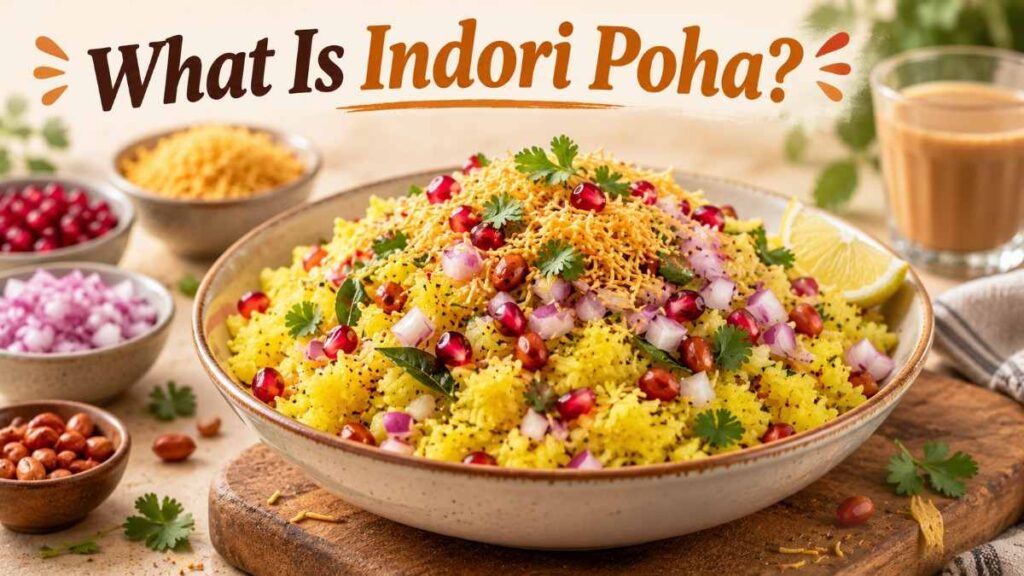
Indori poha is a popular breakfast from Indore, Madhya Pradesh. It is prepared with flattened rice and a simple tempering of mustard seeds, curry leaves, green chilli, onion, and spices.
What makes Indori poha different is the combination of flavours and toppings. A little sugar balances the savoury spices, lemon adds tanginess, while peanuts and sev bring crunch. Fresh coriander and sometimes pomegranate seeds are added before serving.
The poha itself should be soft and fluffy without becoming wet or mushy.
Ingredients for Indori Poha
- 2 cups thick poha
- 1 small onion, finely chopped
- 1 green chilli, chopped
- ¼ cup peanuts
- 1 teaspoon mustard seeds
- ½ teaspoon fennel seeds
- 6 to 8 curry leaves
- ½ teaspoon turmeric
- 1 teaspoon sugar
- Salt to taste
- 1 tablespoon oil
- Fresh coriander
- Lemon juice
- Sev for topping
How to Make Indori Poha

Step 1: Rinse the poha
Place the poha in a colander and rinse it gently under running water. Let it rest for a few minutes so the flattened rice absorbs the moisture.
The poha should become soft but should still hold its shape.
Step 2: Prepare the tempering
Heat oil in a pan. Add mustard seeds and let them crackle.
Add fennel seeds, curry leaves, green chilli, and peanuts. Cook until the peanuts become lightly crunchy.
Step 3: Add the onion and spices
Add chopped onion and cook until slightly soft.
Add turmeric, sugar, and salt. Mix everything well so the spices coat the onions evenly.
Step 4: Add and cook the poha
Add the softened poha to the pan and gently mix it with the tempering.
Cook for a few minutes over low to medium heat. Avoid excessive stirring, as it can break the flattened rice.
Step 5: Finish with toppings
Turn off the heat and add lemon juice and fresh coriander.
Transfer the poha to a serving bowl and top with sev and additional peanuts.
What Makes Indori Poha Different?
The biggest difference between Indori poha and regular poha is the way the flavours and toppings come together.
Indori-style breakfast poha usually has a distinctive balance of sweet, tangy, savoury, and spicy flavours. Sev adds crunch, peanuts add nuttiness, and lemon brings freshness.
These toppings are not just decoration. They are an important part of the eating experience and give Indori poha its characteristic texture.
Egg Poha Recipe
Egg poha is a simple variation of the traditional dish that combines flattened rice with scrambled eggs. It keeps the basic poha preparation but adds a savoury egg mixture for extra richness.
Ingredients for Egg Poha
- 2 cups thick poha
- 2 eggs
- 1 small onion, chopped
- 1 green chilli, chopped
- ¼ cup peanuts
- 1 teaspoon mustard seeds
- ½ teaspoon turmeric
- ½ teaspoon red chilli powder
- 6 to 8 curry leaves
- Salt to taste
- 1 tablespoon oil
- Fresh coriander
- Lemon juice
How to Make Egg Poha

Step 1: Prepare the poha
Rinse the poha gently and leave it aside for a few minutes until it becomes soft.
Step 2: Cook the egg mixture
Heat oil in a pan and add mustard seeds and curry leaves.
Add onion and green chilli and sauté until the onion softens.
Crack the eggs into the pan. Add turmeric, red chilli powder, and salt, then scramble the eggs until cooked.
Step 3: Combine the poha and eggs
Add the softened poha to the egg mixture and gently toss everything together.
Cook for a few minutes so the flavours combine without making the poha dry.
Step 4: Garnish and serve
Finish with fresh coriander and lemon juice. Add roasted peanuts for crunch and serve hot.
Indori Poha vs Egg Poha
Both dishes use flattened rice as their base, but the overall flavour and texture are different.
| Indori Poha | Egg Poha |
| Mildly sweet and tangy | More savoury and egg-forward |
| Often topped with sev | Usually finished with coriander and lemon |
| Peanuts add crunch | Eggs add a soft, rich texture |
| Traditional Indore-style flavours | Egg-based variation of poha |
You can also combine the two styles by adding scrambled egg to Indori-style poha. This creates a fusion version rather than a traditional recipe.
Poha with Peanuts and Other Toppings
Peanuts are commonly used in poha because they add a crunchy texture that contrasts with the soft flattened rice. For an Indori-style breakfast, you can also add:
- Sev
- Fresh coriander
- Lemon juice
- Chopped onion
- Pomegranate seeds
Add the toppings just before serving so they retain their texture.
Tips for Fluffy Poha
Getting the texture right is one of the most important parts of making poha at home.
Use thick poha and rinse it gently rather than soaking it for a long time. Too much water can make the flattened rice mushy.
Let the rinsed poha rest for a few minutes before cooking. Use low to medium heat and mix gently instead of stirring continuously.
Once the poha is heated through, turn off the heat. Overcooking can make it dry or sticky.
Calories in Indori Poha
The calories in poha depend on the portion size and ingredients used. Peanuts, oil, sugar, and sev can all increase the total calorie content.
A typical serving of homemade Indori poha may contain approximately 200 to 300 calories, although the actual amount will vary according to the recipe.
Is Indori Poha a Healthy Breakfast?
Indori poha can be included as part of a balanced breakfast. Flattened rice provides carbohydrates, while peanuts contribute some protein and fat. Adding vegetables can increase the overall fibre and nutrient content.
For a more filling meal, you can add a protein-rich side or prepare an egg variation. Portion size and the quantity of oil, sugar, and sev also matter.
Conclusion
Indori poha and egg poha show how versatile a simple poha breakfast can be. Indori poha stands out with its fluffy texture, tangy and mildly sweet flavour, peanuts, and sev, while egg poha adds scrambled eggs for a more savoury variation.
Once you get the moisture and cooking time right, both versions are easy to prepare at home. Whether you prefer traditional Indori flavours or want to try an egg poha recipe, poha can be turned into a quick and satisfying breakfast with just a few simple ingredients.
FAQs
Q: What is Indori poha, and how is it different from regular poha?
Indori poha is a regional variation from Indore, Madhya Pradesh. It is commonly prepared with mustard seeds, curry leaves, green chilli, onion, and spices, then finished with lemon, peanuts, sev, and other toppings. Its flavour is typically a combination of savoury, tangy, and mildly sweet notes.
Q: What is the difference between Indori poha and egg poha?
Indori poha focuses on traditional Indori flavours and toppings such as sev and peanuts. Egg poha includes scrambled eggs with the flattened rice, giving it a more savoury and substantial flavour.
Q: How many calories are in Indori poha?
A serving of homemade Indori poha may contain approximately 200 to 300 calories. The actual calorie content depends on the portion size and the amount of oil, peanuts, sugar, and sev used.
Q: Is Indori poha a healthy breakfast?
Indori poha can be part of a balanced breakfast. Adding vegetables and controlling the amount of oil, sugar, and sev can help keep the meal balanced. Adding a protein source can also make it more filling.
Q: How do I make fluffy Indori poha without making it mushy?
Use thick poha, rinse it gently, and let it rest for a few minutes instead of soaking it for too long. Use only enough water to soften the flattened rice, cook it over low to medium heat, and mix gently while cooking.